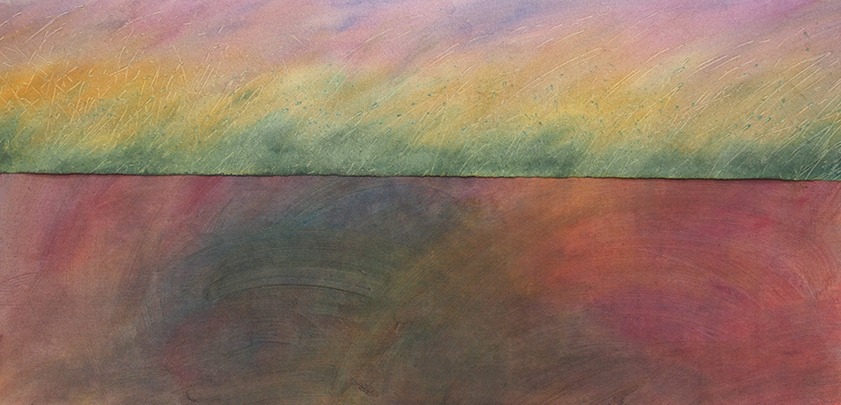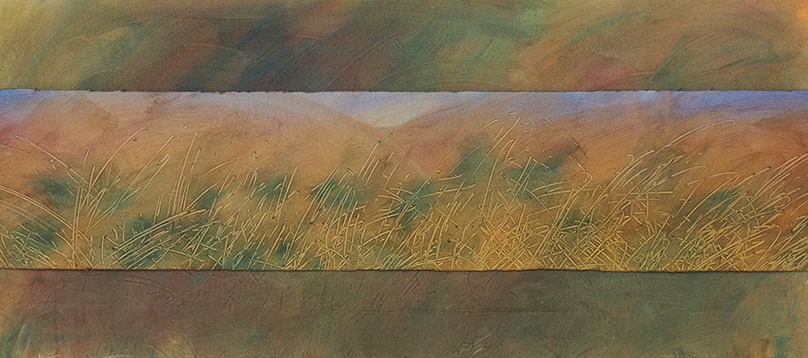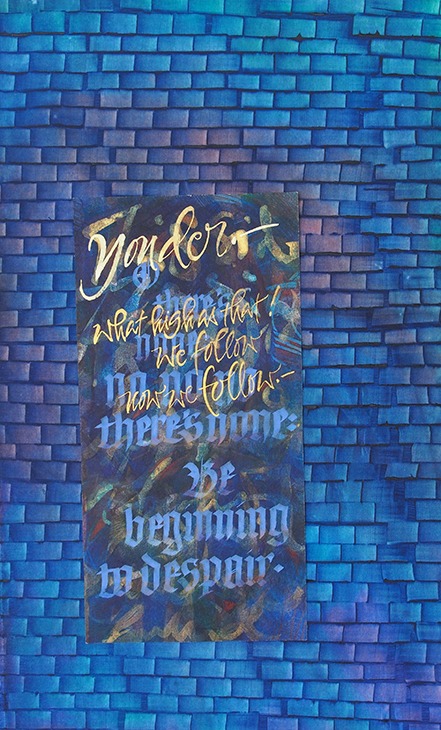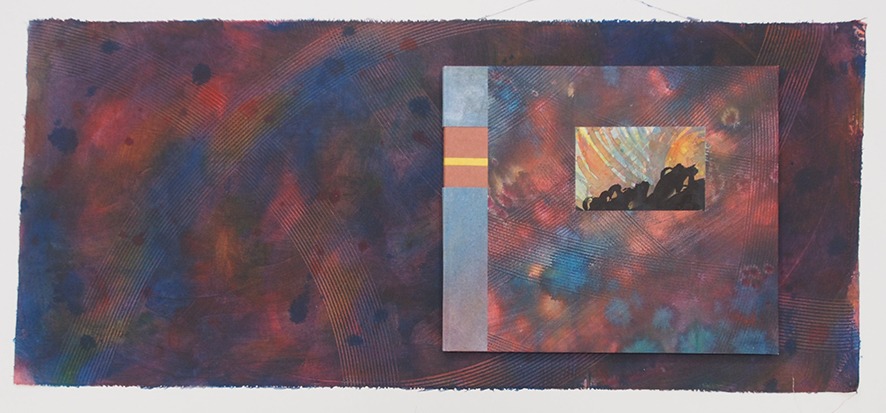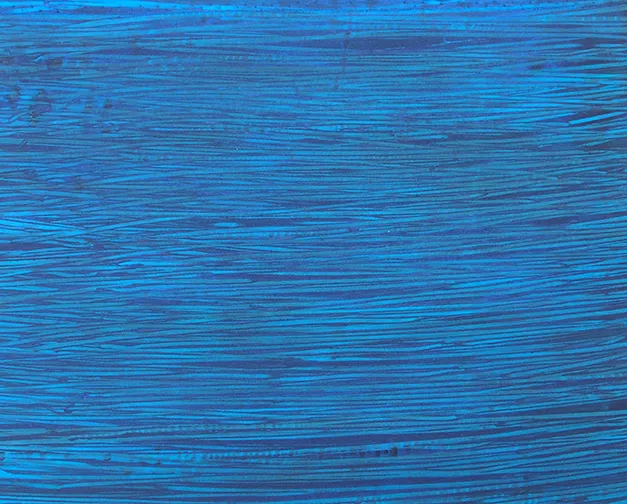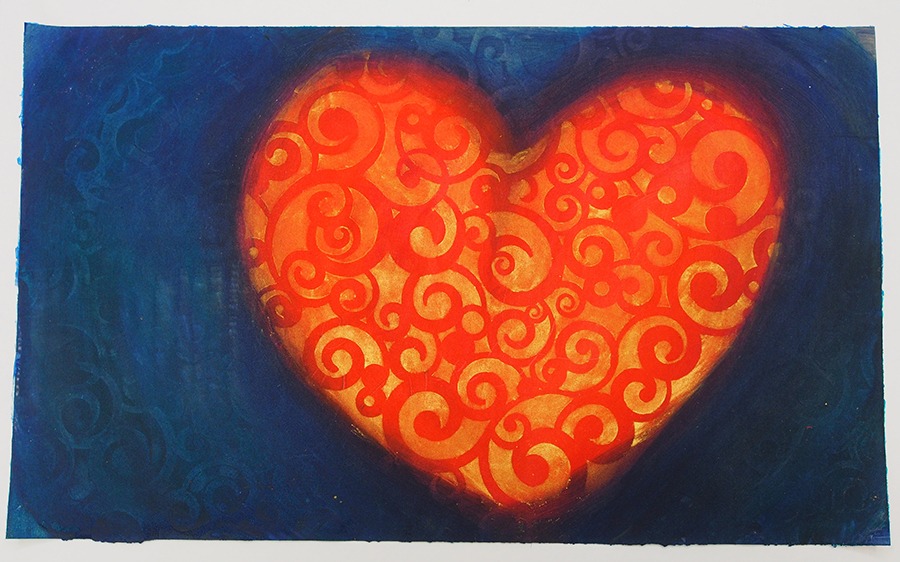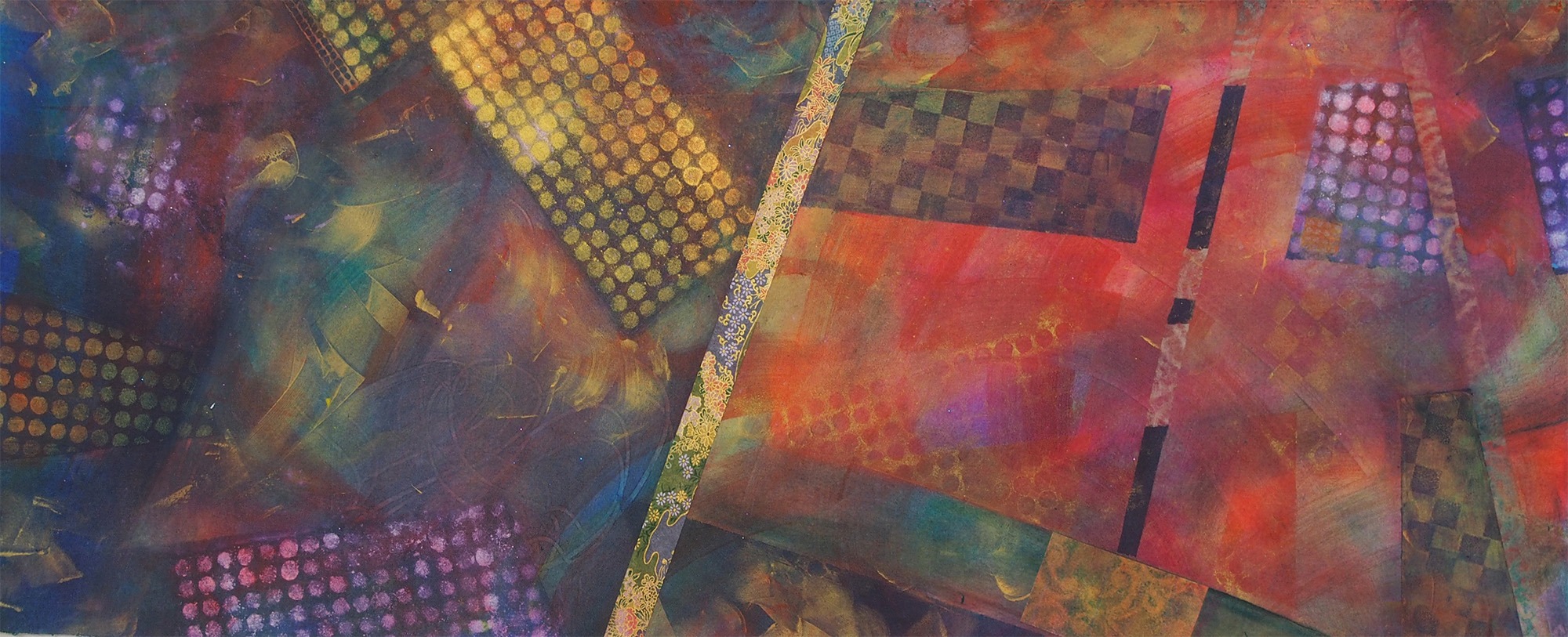
Paste paper originated about 450 years ago when printers, seeking inexpensive endpapers for their books, added paint to paste and made patterns with the tools at hand. Many of us were first introduced to paste paper in primary school, where it is known as finger painting. More recently, calligraphers and book artists realized that paste paper is an excellent surface for lettering. I am interested in using paste for the text pages in books rather than the endpapers.
My papers usually, but not always, have multiple layers of transparent colors. I teach workshops in which participants create reference books that they can refer to when they are at home. The three pieces in the first line below are the first three pages of an unfinished book of Gerard Manley Hopkins’ poem “The Leaden Echo and The Golden Echo.” The bottom line shows a variety of possibilities for paste paper.
Paste Cloth
Paste paper originated about 450 years ago when printers, seeking inexpensive endpapers for their books, added paint to paste and made patterns with the tools at hand. Many of us were first introduced to paste paper in primary school where it is known as finger painting. More recently calligraphers and book artists realized that paste paper makes an excellent surface on which to letter.
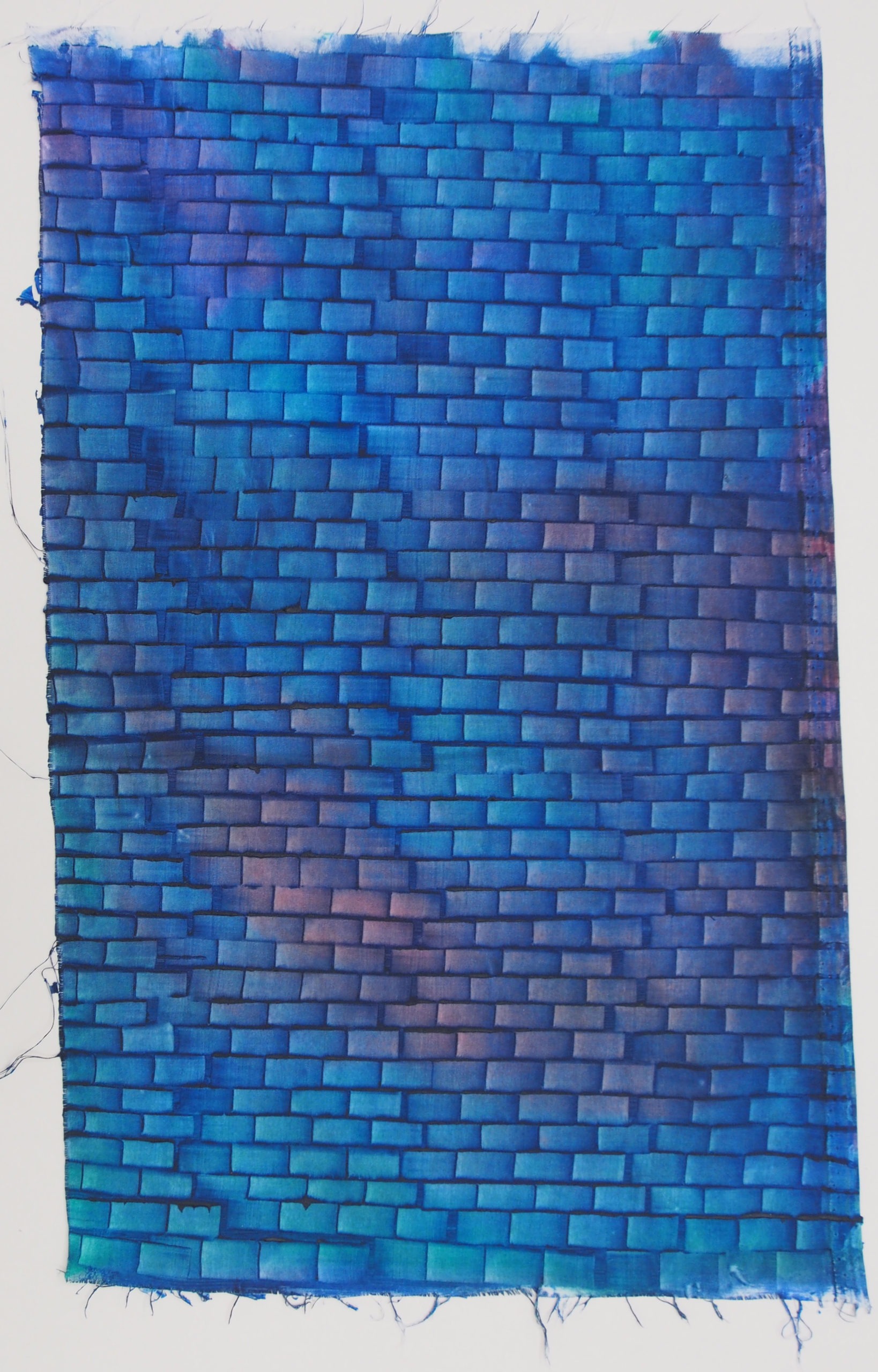
Even more recently I was introduced to Paste Cloth. One of my more difficult tasks as a book artist is finding suitable cloth for the covers and boxes of recently finished books. The discovery that I could paint my cloth with the same paint that I had painted the text paper was a wonderful revelation and has solved that problem.
Below are some samples of my paste cloth. Some of them are with the pages they will eventually go with. One is a book with the cloth for its box.